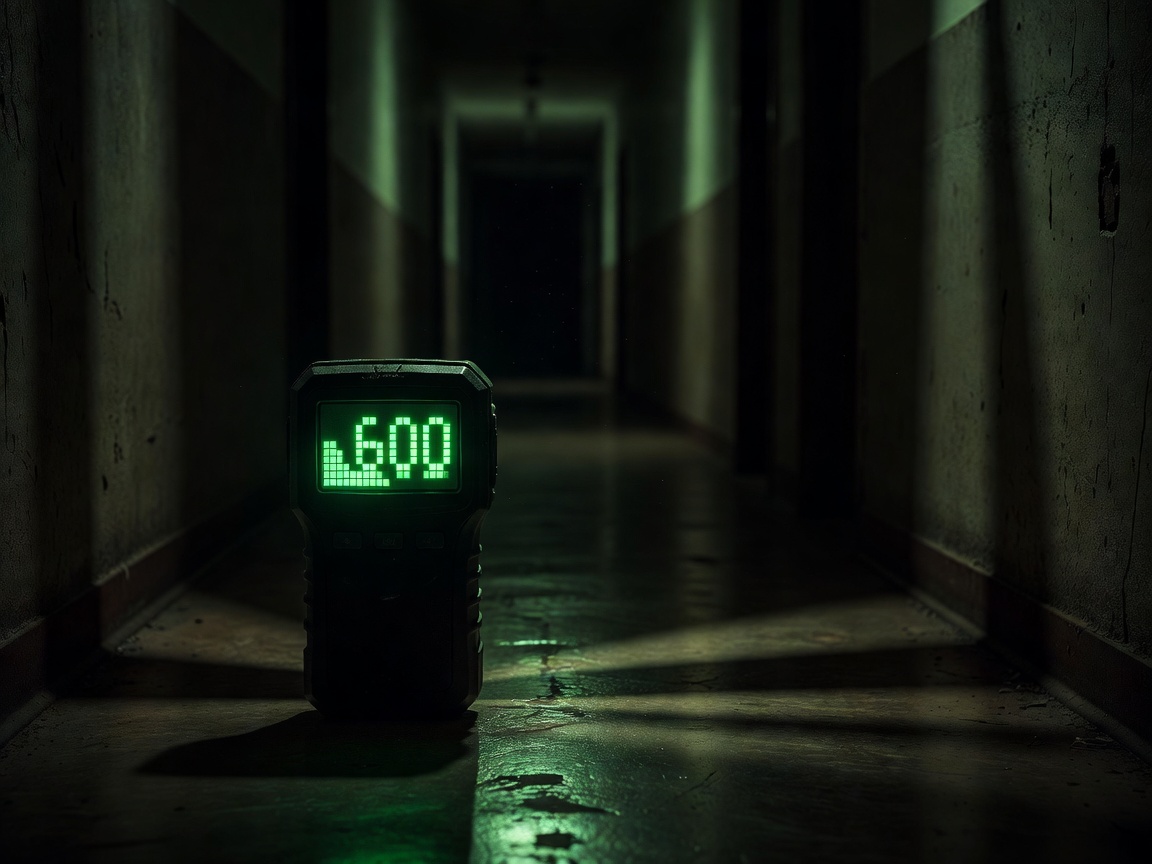
The Science Behind the Sensor
Electromagnetic Field (EMF) meters are arguably the most universally recognized piece of equipment in the paranormal investigator's toolkit. Originating in the industrial and electrical sectors, these devices were designed to detect leaks in microwave ovens, track down faulty household wiring, and monitor radiation near power lines. In the context of ghost hunting, investigators use them based on the theory that paranormal entities either consist of, or draw upon, electromagnetic energy to manifest.
To use an EMF meter effectively, an investigator must first understand what the device is actually measuring. Standard meters detect AC (alternating current) fields, which are generated by modern electrical systems and appliances. When electricity flows through a wire, it creates a magnetic field. An EMF meter picks up these fields and displays their strength, usually measured in milligauss (mG) or microteslas (µT).
Types of EMF Detectors
The market is flooded with various types of meters, each with its own detection range and visual output. Recognizing the differences is crucial for any serious investigator:
- Single-Axis Meters: These meters measure the electromagnetic field along one specific plane. To get an accurate reading of the environment, the user must physically rotate the device in all directions. While they are generally more affordable, they require active handling which can inadvertently introduce false readings via static electricity.
- Tri-Axis Meters: These devices are equipped with three internal sensors positioned on the X, Y, and Z axes. They calculate the total magnetic field regardless of how the device is held. Tri-axis meters provide a much more stable and reliable reading, making them a preferred choice for stationary environmental monitoring.
- Multi-Spectrum Detectors: Some advanced units measure not only magnetic fields but also electrical fields and radio/microwave frequencies. These are invaluable for ruling out interference from local radio towers or hidden Wi-Fi routers.
- LED Array Meters: Popularized by television media, these meters use a row of colored LEDs to indicate field strength rather than a digital numerical readout. While highly visible in dark environments, they lack the precise numerical data required for scientific logging.
Identifying False Positives
The primary challenge in using an EMF meter is identifying and isolating "false positives"—readings generated by mundane sources rather than anomalous activity. An investigator's first task upon entering a location is to perform a baseline sweep. This involves walking through the space with the meter to document the standard background electromagnetic radiation.
Common sources of high EMF readings include:
- Wiring in walls and floors: Older buildings, particularly those with outdated knob-and-tube wiring, often leak significant electromagnetic energy.
- Fuse boxes and breaker panels: These will consistently produce high, localized readings.
- Appliances: Refrigerators, microwaves, CRT televisions, and even modern smart devices emit strong fields, especially when compressors kick on or data is transmitted.
- Plumbing: In some cases, poorly grounded electrical systems use metal water pipes as a ground, electrifying the plumbing and creating fields in bathrooms and kitchens.
- Cellular Devices: Investigators should always switch their personal phones to airplane mode. A phone seeking a cellular signal or receiving a text message can easily trigger a spike on a sensitive EMF meter.
The "Fear Cage" Effect
Beyond identifying ghosts, EMF meters serve an important biological safety function. Prolonged exposure to unusually high electromagnetic fields (often exceeding 100 mG) can cause physiological reactions in humans. This phenomenon is sometimes referred to in the paranormal community as a "fear cage."
Symptoms of high EMF exposure include paranoia, feelings of being watched, nausea, dizziness, and even auditory or visual hallucinations. If a client reports experiencing a haunting in a specific room—such as feeling a sense of dread or seeing shadows—and an investigator discovers massive unshielded electrical junction boxes beneath the floorboards, the haunting is likely solved. The biological response to the high EMF is generating the "paranormal" experience.
Methodology and Best Practices
When an anomalous spike is detected, standard protocol dictates that the investigator should attempt to replicate it. Move the meter away and bring it back to the exact same location. A static, unmoving high reading is almost certainly man-made electrical wiring. An anomalous reading, according to theoretical models, should be dynamic—it should move, fluctuate without a power cycle trigger, and potentially respond to environmental stimuli or direct questioning.
Always log your findings. Noting the time, exact location, and milligauss readout allows teams to compare EMF data against audio recordings and video timestamps later during the review process. Without this correlation, an isolated EMF spike holds very little analytical value.